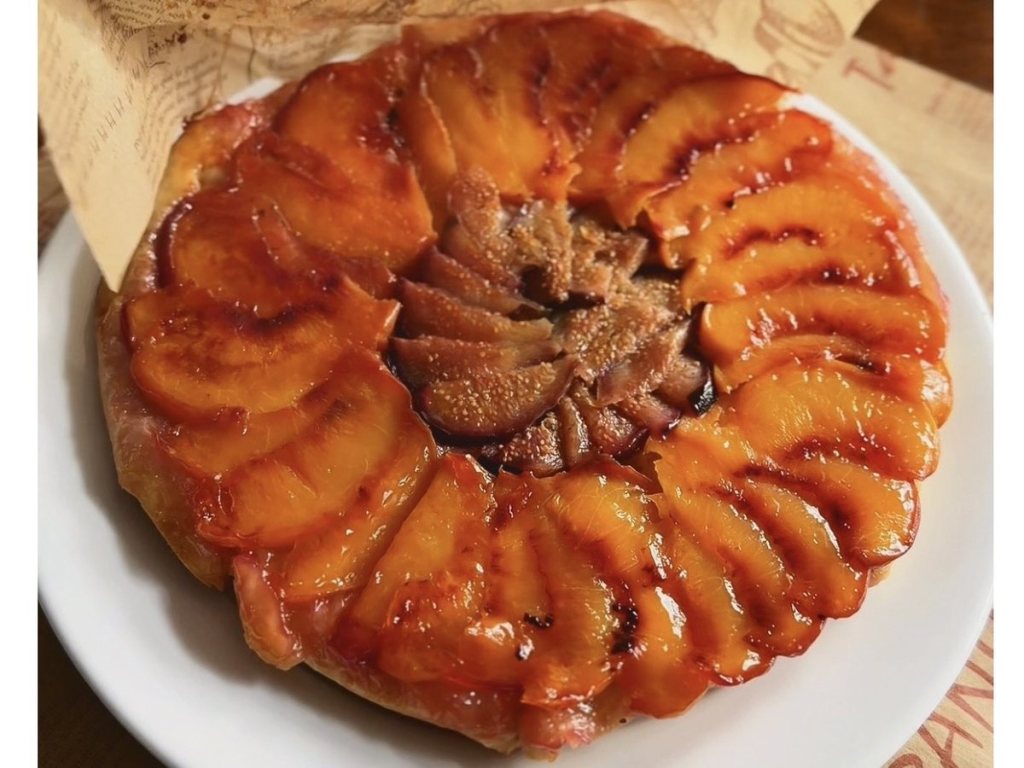
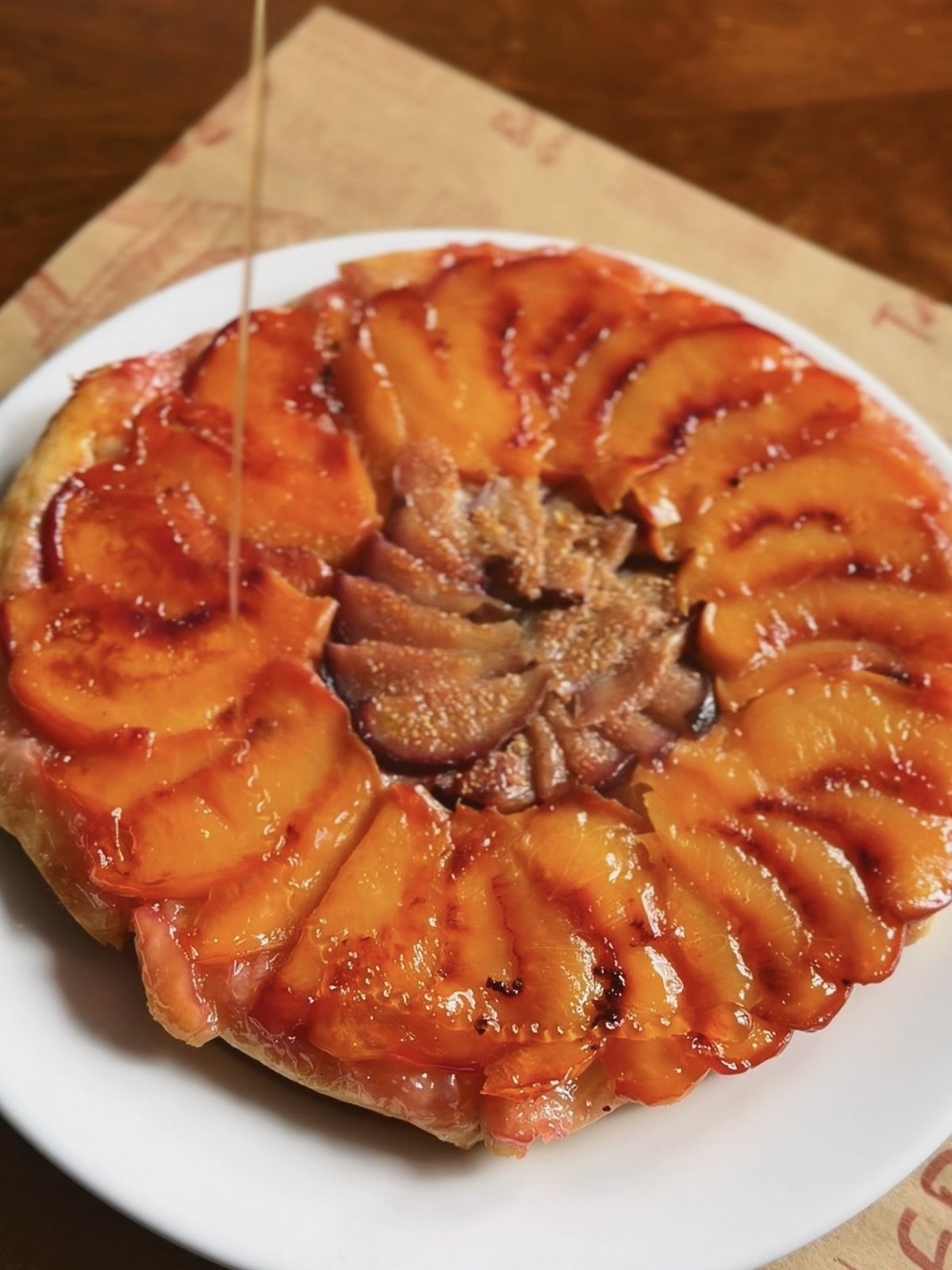
This is the prettiest thing I have baked all fall, and it is almost embarrassing how simple it is. There is no crust to make, no tart pan, no blind baking. You butter a sheet of parchment, sprinkle it with sugar, lay the fruit out in a circle, cover the whole thing with a sheet of store bought puff pastry, and bake it.
Then you flip it over, peel the parchment off, and the fruit is sitting on top in the exact pattern you arranged it in, glossy and caramelized. That is the whole trick. The arranging takes five minutes and it is the only part that matters.
Why this one works
Baking it upside down does two things at once. The butter and sugar under the fruit turn into a caramel while it bakes, so the fruit sits in its own syrup instead of drying out. And the puff pastry is on top the whole time, which means it puffs and browns properly instead of going soggy underneath wet fruit.
It also means you never have to make it look nice at the end. You make it look nice at the beginning, face down, and the oven does the rest.
What you need
- 1 sheet puff pastry, thawed
- 2 to 3 ripe peaches, sliced
- 4 to 5 fresh figs, sliced
- Butter, softened, for the parchment
- Sugar, a generous sprinkle
- Honey, for finishing
You also need a sheet of parchment paper and a round baking dish. The dish is what holds the round shape while it bakes, so use one roughly the size you want the tart to be.
How to make it
1. Butter the parchment
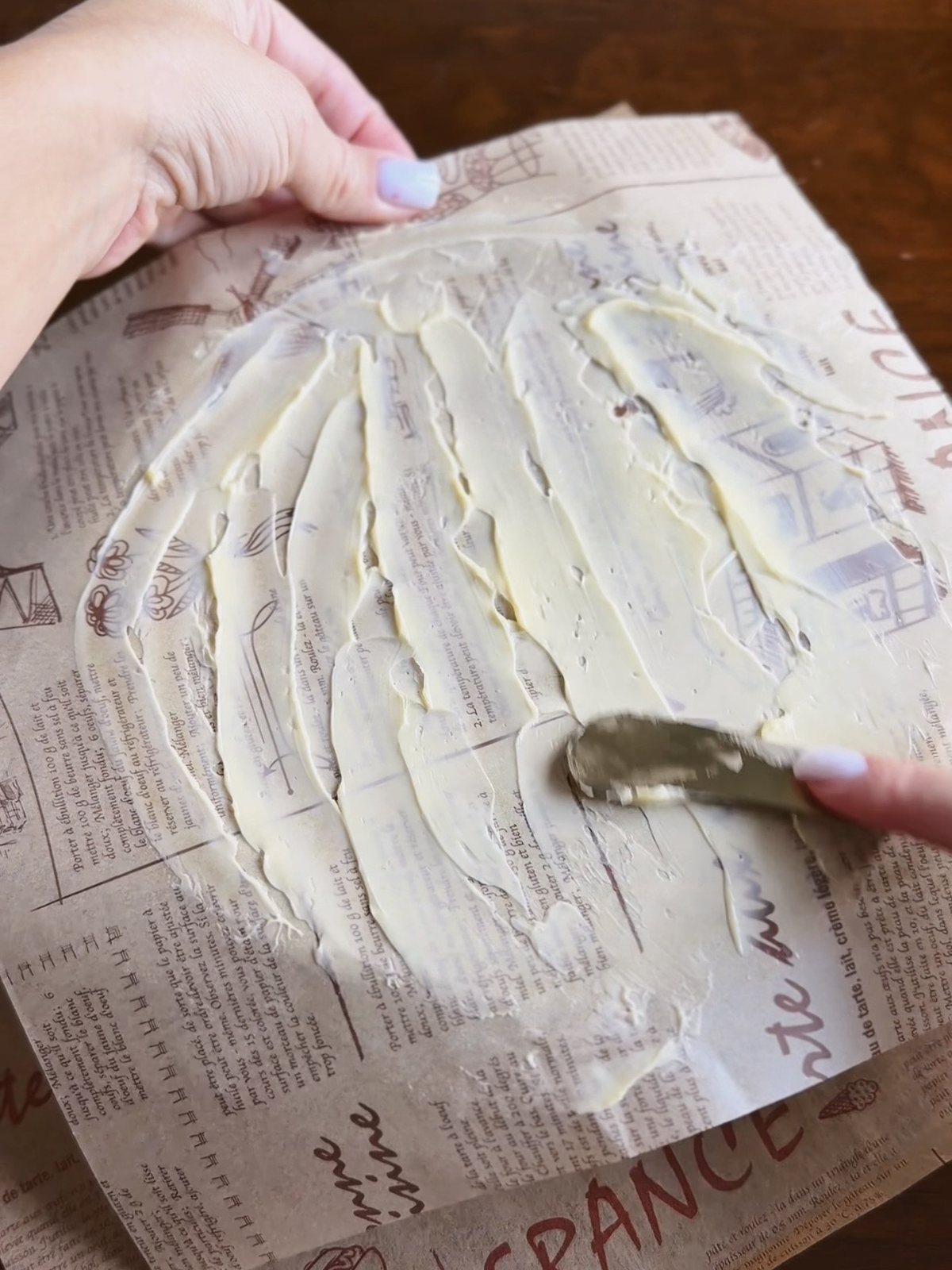
Spread softened butter over a sheet of parchment in a circle roughly the size of your baking dish, then sprinkle it generously with sugar. Be more generous than feels right. This is the layer that becomes the caramel.
2. Arrange the fruit
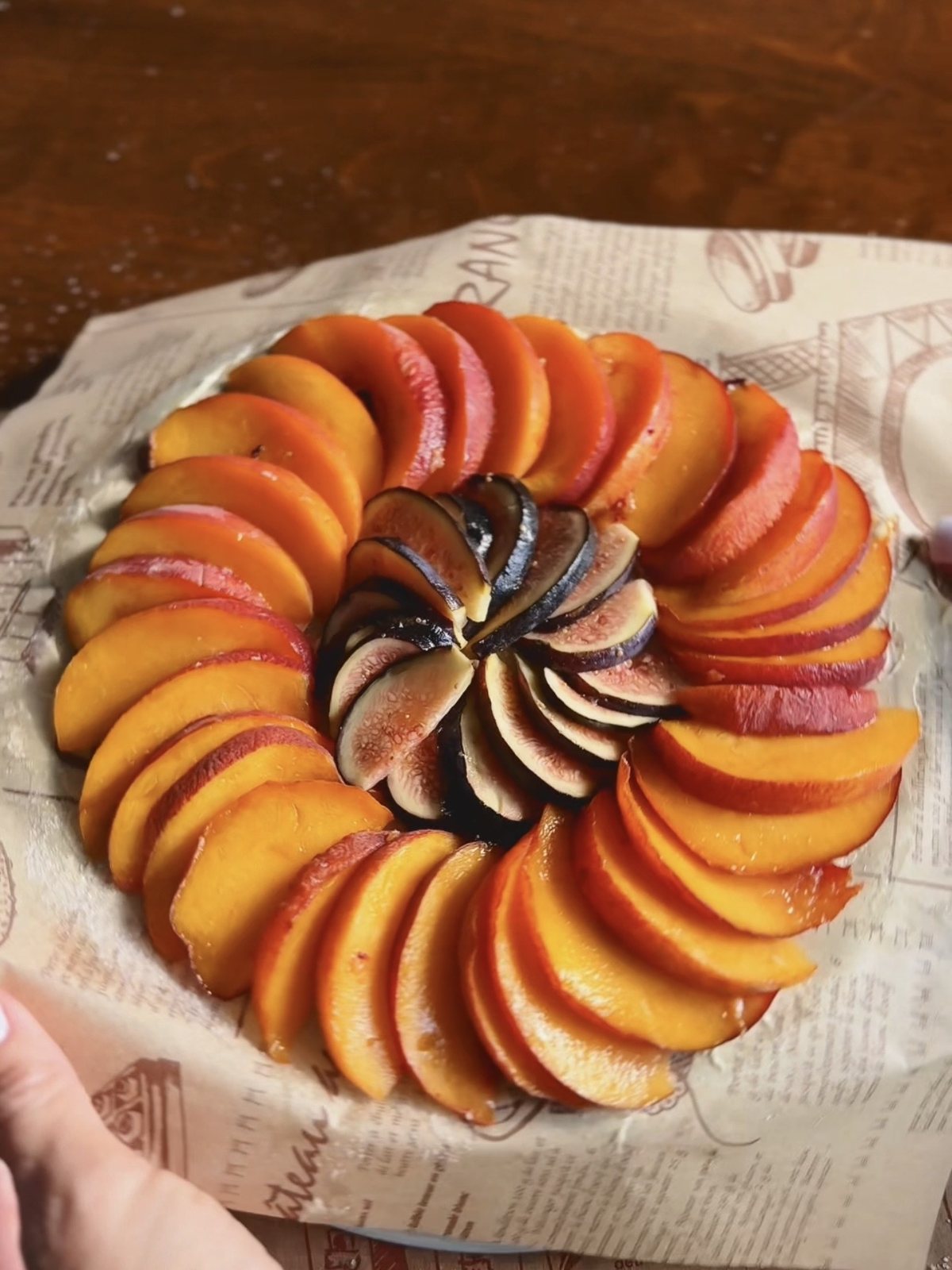
Lay the peach slices in an overlapping ring around the outside, all facing the same direction. Work your way in, then fill the center with the sliced figs.
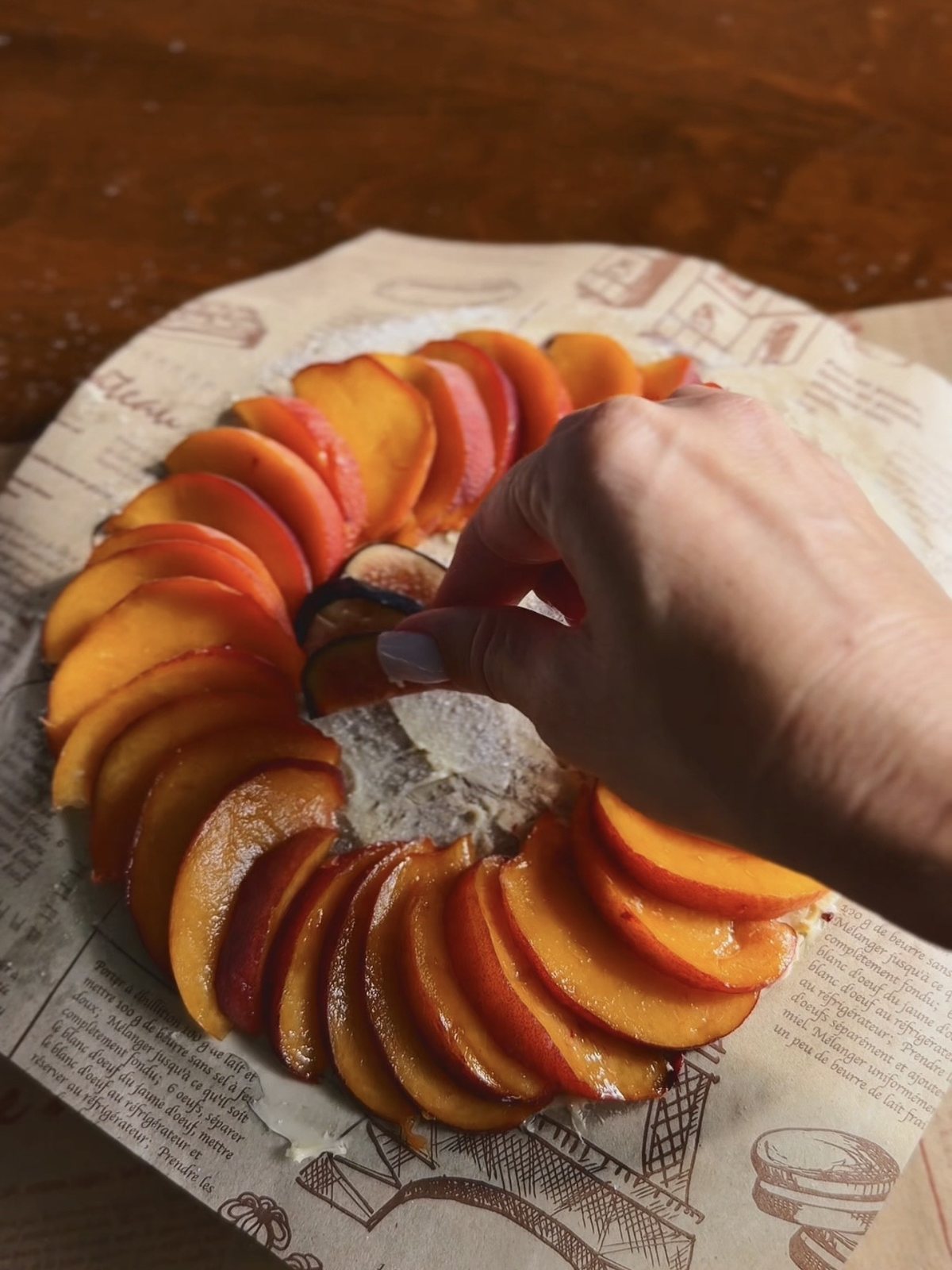
Remember that you are looking at the bottom of the tart. Whatever you see now is exactly what you will see when you flip it, so take the extra two minutes here.
3. Cover with puff pastry
Lay the sheet of puff pastry over the fruit and trim it into a round a little larger than the circle of fruit. Tuck the edges down and under, the way you would tuck in a sheet.
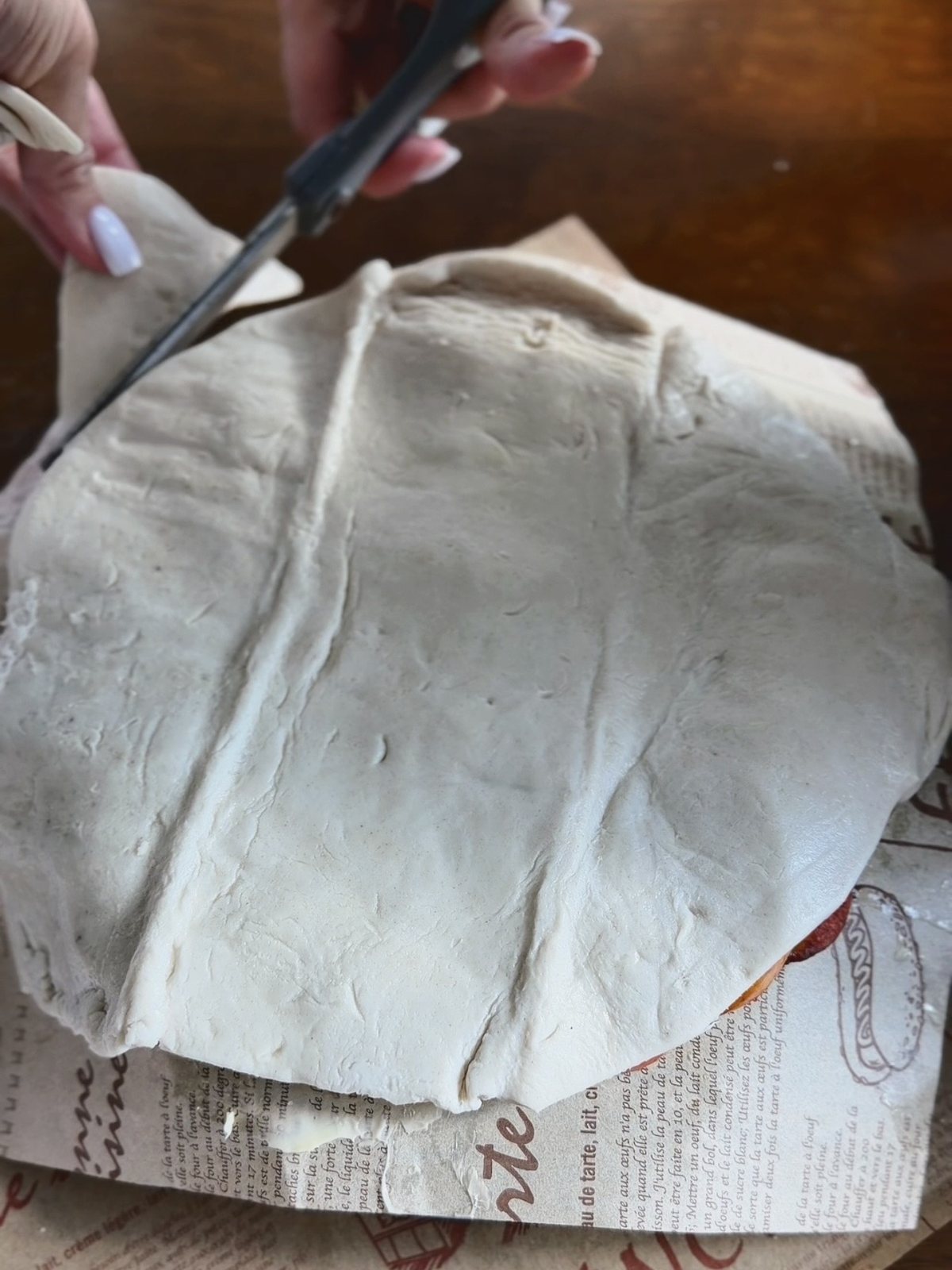
4. Lift it into the dish
Pick the whole thing up by the parchment and lower it into your baking dish, parchment and all. The paper comes with it and the sides of the dish keep everything round.
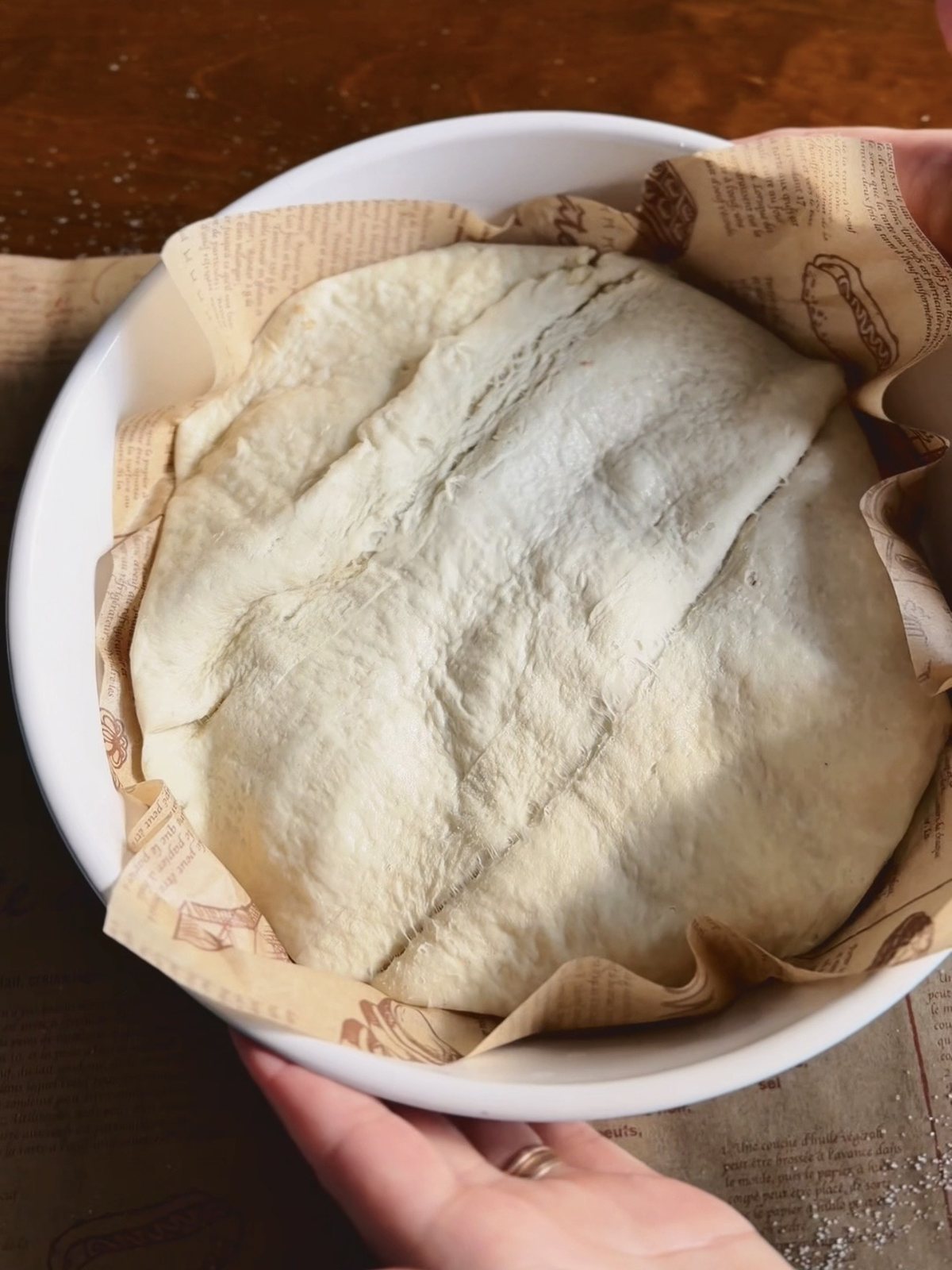
5. Bake
375F for 15 to 20 minutes, until the pastry is puffed and deeply golden. You want real color on it, not pale. The pastry is the structure and it needs to be properly baked to hold the fruit when you turn it over.
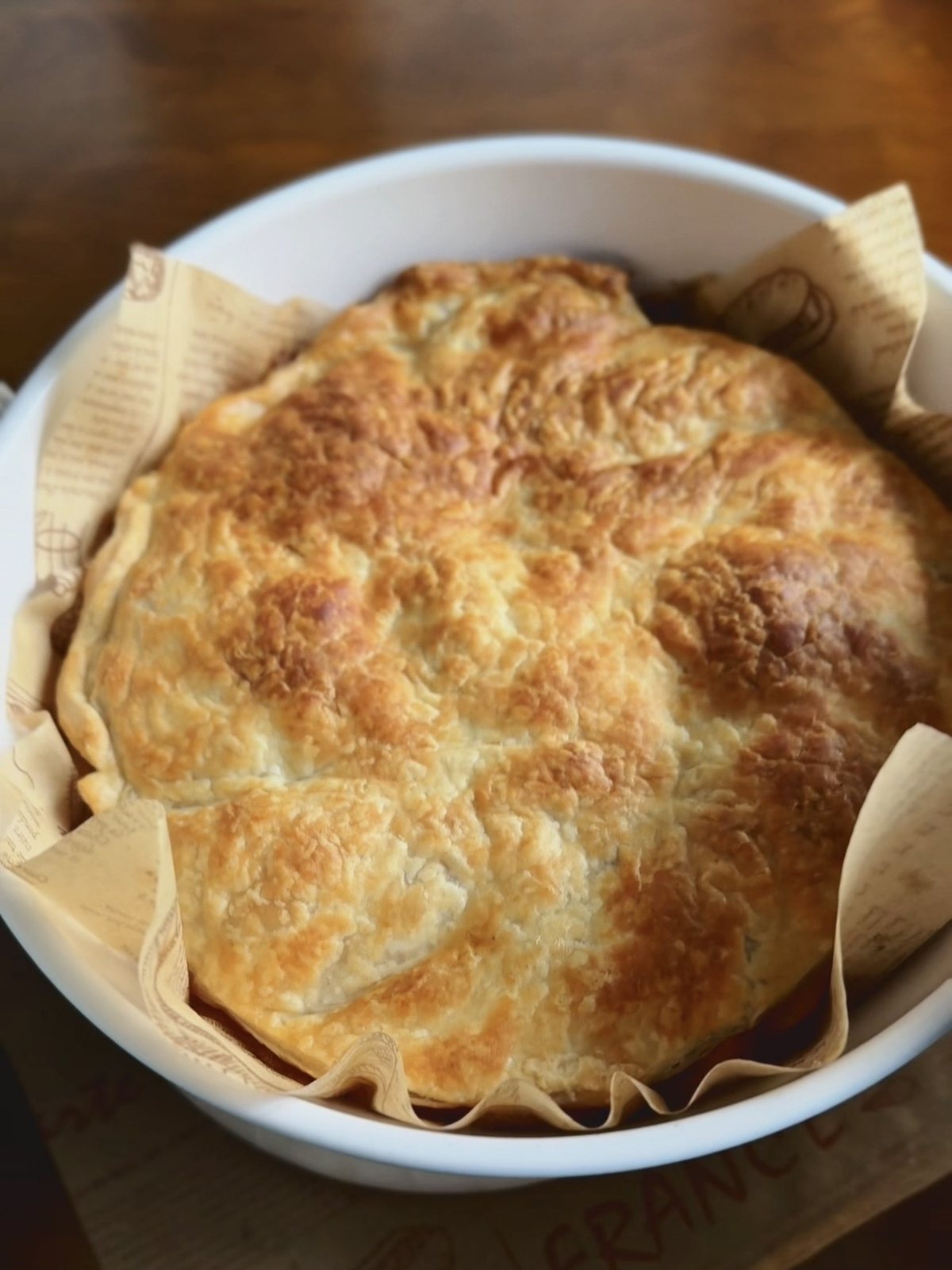
6. Flip it
Let it sit for a minute or two out of the oven, then put a plate over the top of the dish and turn the whole thing over. Lift the dish away and peel the parchment off slowly.
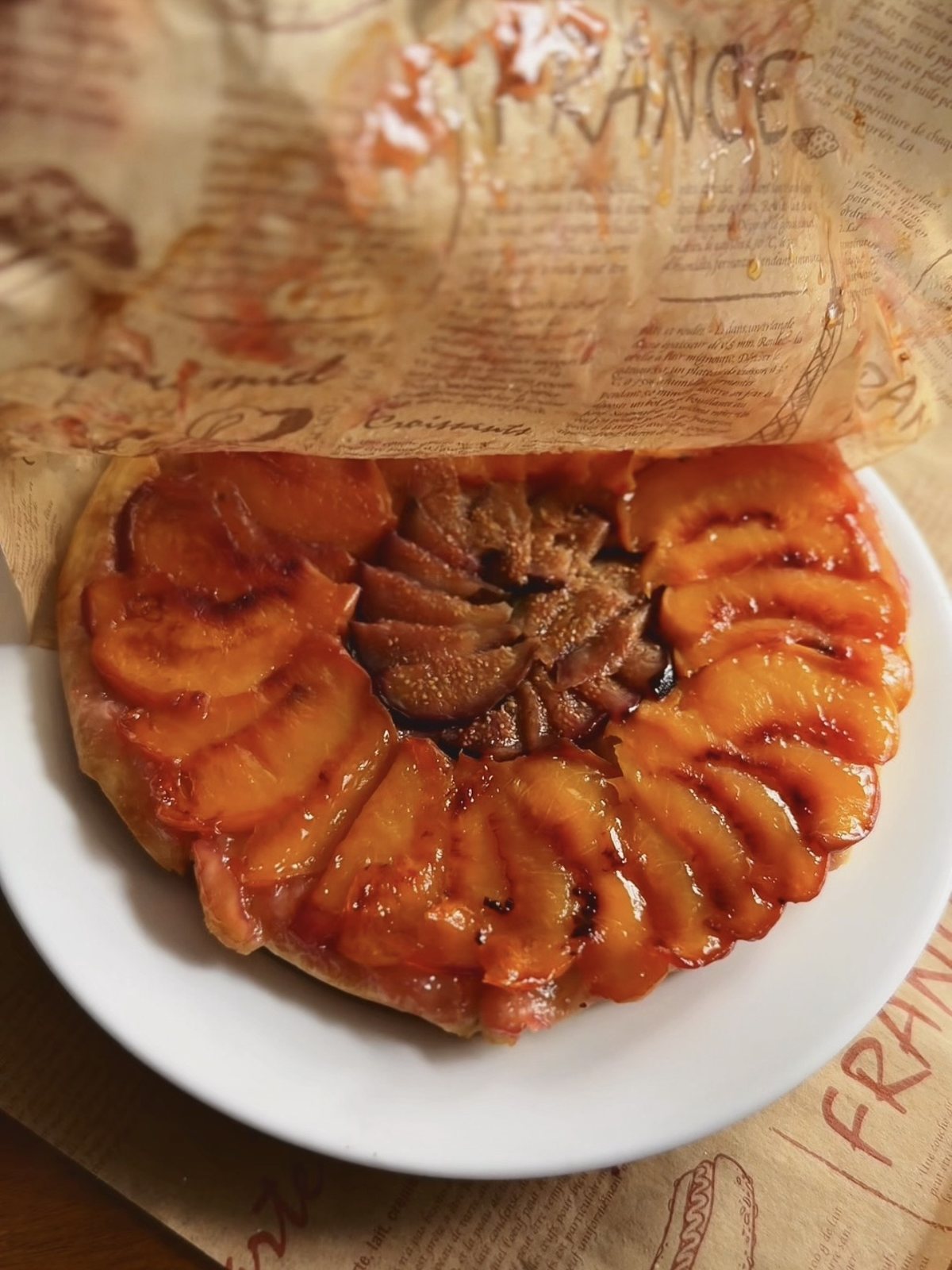
7. Finish with honey
Drizzle honey over the warm fruit while it is still glossy. That is it.
A few notes
It works with any fruit. Apples, pears and plums all behave the same way. Figs and peaches together are a late summer into fall thing, and figs have a short season, so make it now if you can find them.
Do not skip the sugar. It is doing the work. Without enough of it the fruit steams instead of caramelizing and you lose the shine.
Slice the fruit evenly. Thin, even slices lie flat and overlap neatly. Thick uneven ones sit at angles and the pattern falls apart.
Best warm. It is at its best within an hour of coming out of the oven, while the pastry still has some crunch at the edges and the caramel is loose.
If you make it, I would love to see it. Tag me and I will come look.


Leave a comment