Every year I tell myself I will set the table early, and every year I am doing it twenty minutes before people walk in. So this year I worked out which part actually makes a table look finished, and it is not the centerpiece. It is the napkin.
A folded napkin is the one thing on a table that looks like somebody made a decision. Everything else can be plates you already own and a few branches from the yard, and the table still reads as done. Here are four folds I use, from the one that takes thirty seconds to the one that holds your silverware so nobody has to hunt for a fork.
Everything in these photos is shoppable. Tap any photo and it opens with every piece in that picture tagged.
Before you fold anything
Two things make all four of these work, and neither one is a technique.
Use a napkin with some weight to it. A thin napkin will not hold a crease, and halfway through dinner it goes soft and slumps into the plate. Cotton or linen with a finished edge holds its shape all evening.
Press them first. Not perfectly, just enough that there is no fold line fighting you from the last time they sat in the drawer. Five minutes for a whole set, and it is the difference between a fold that stands up and one that looks tired before anyone sits down.
Four ways to fold a napkin
Each one takes under a minute once you have done it twice. The video further down shows all four from start to finish, so if you would rather watch than read, skip ahead.
1. The Christmas tree
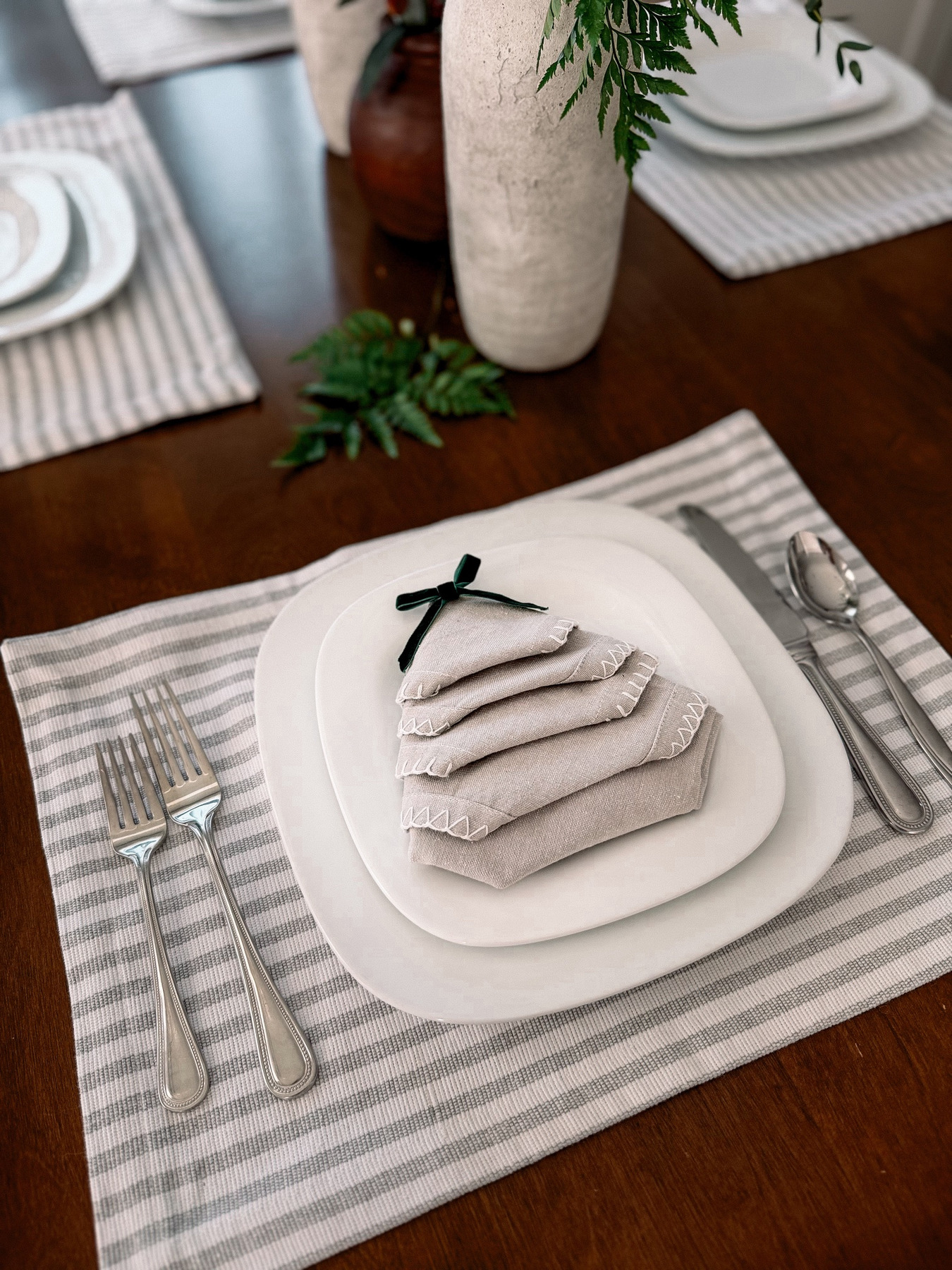
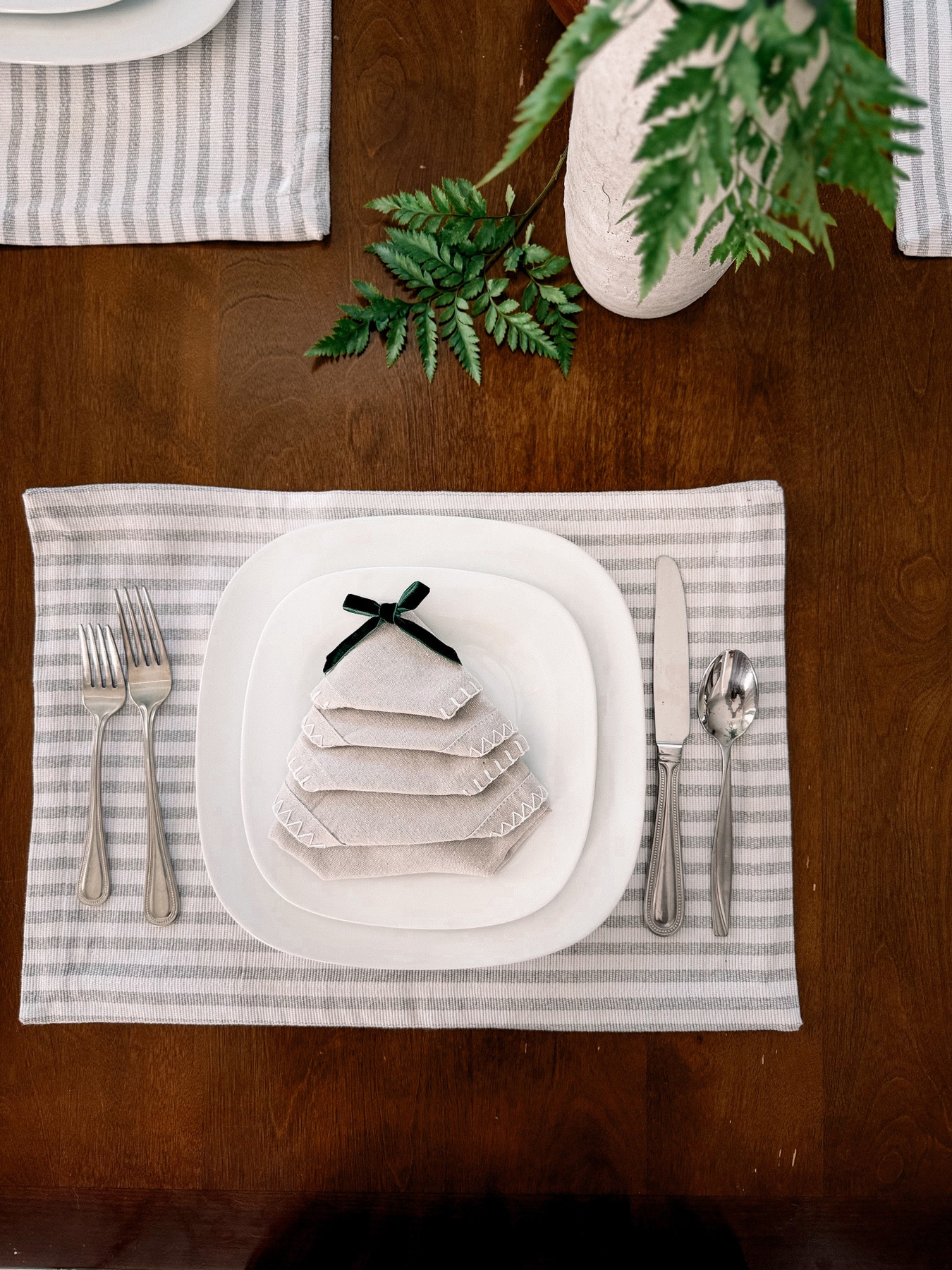
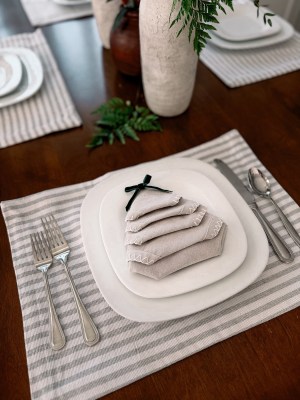
This is the one people pick up their phone for. The napkin is folded into stacked points that step down like branches, and a short piece of green velvet ribbon ties the top. It lies flat on the plate rather than standing up, so it will not tip over while people are finding their seats.
It is the slowest of the four and still under a minute. Save it for Christmas, or for the one dinner a year where you want the table to be the first thing anyone mentions.
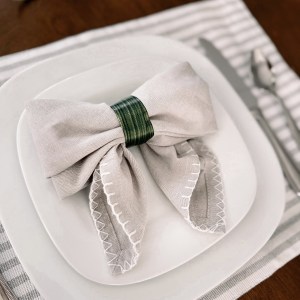
2. The bow
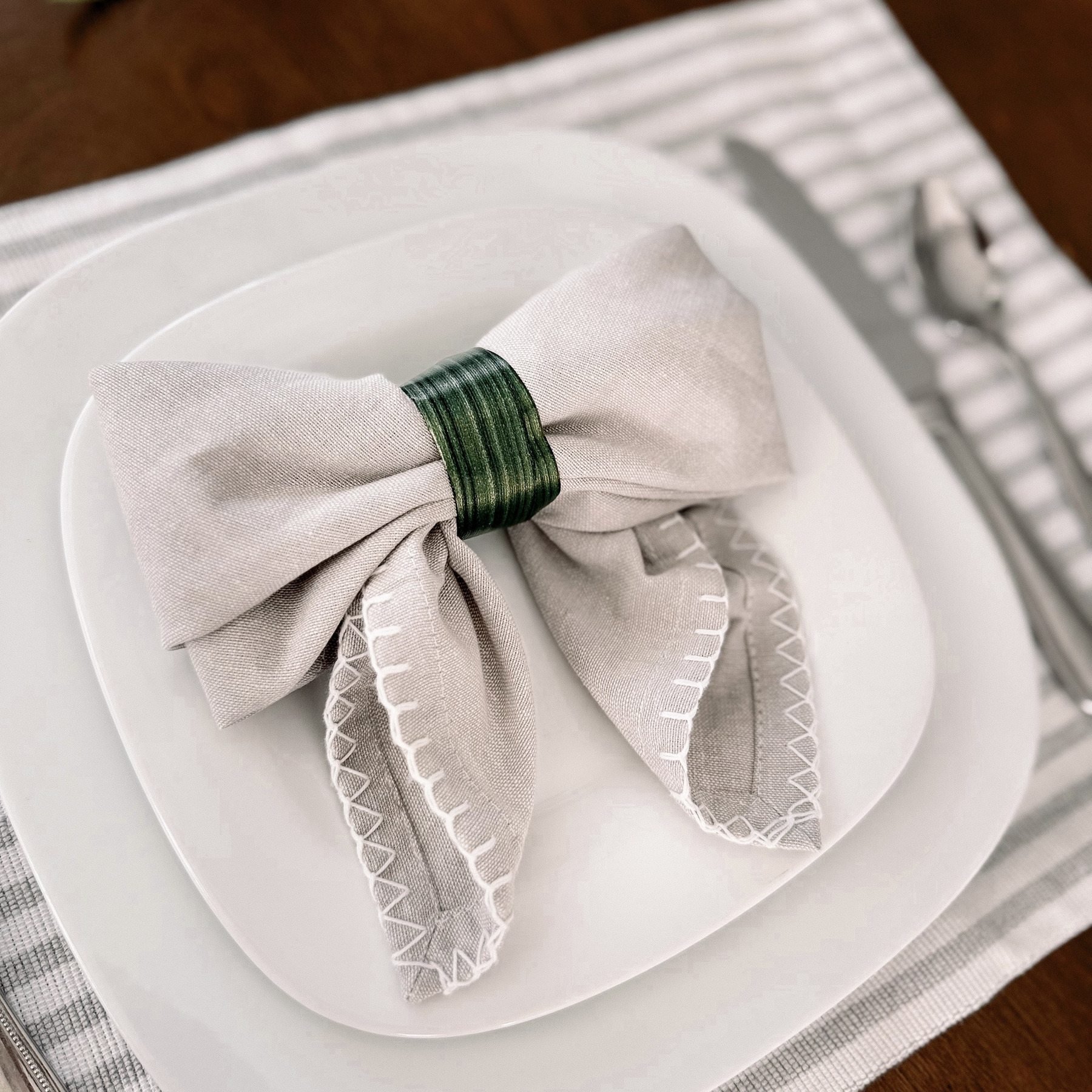
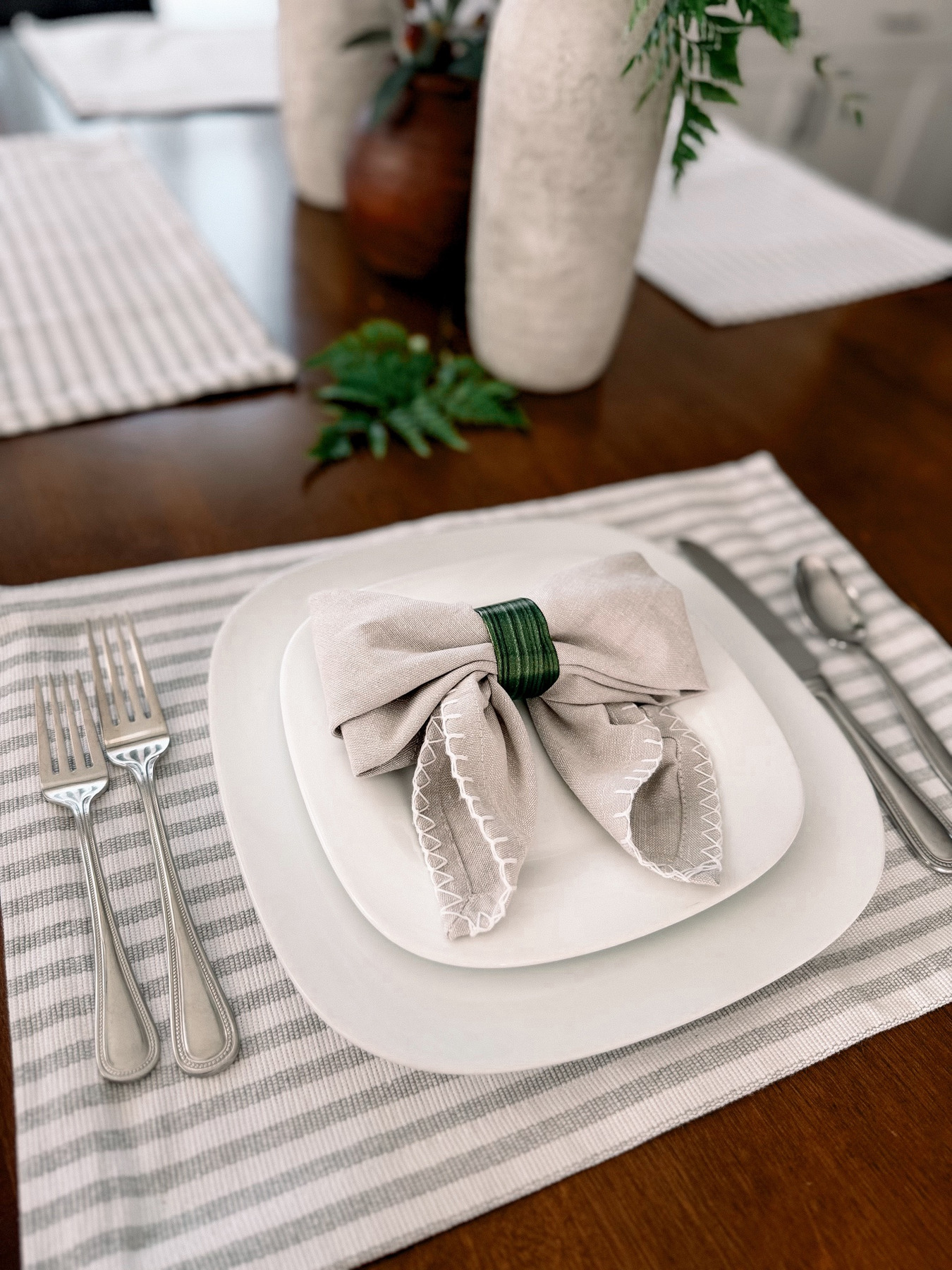
The fastest one here. The napkin is gathered through a ring so both sides open out like a bow and the stitched corners fall forward. Thirty seconds once you have the hang of it, and it works with any ring you already own.
This is my default when people are already in the house. It looks deliberate from across the room and it takes almost no thought.
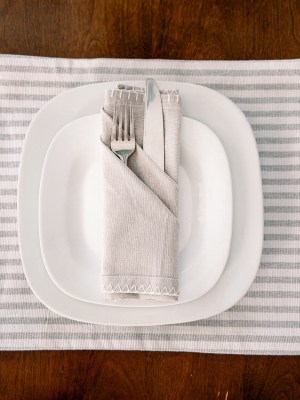
3. The pocket
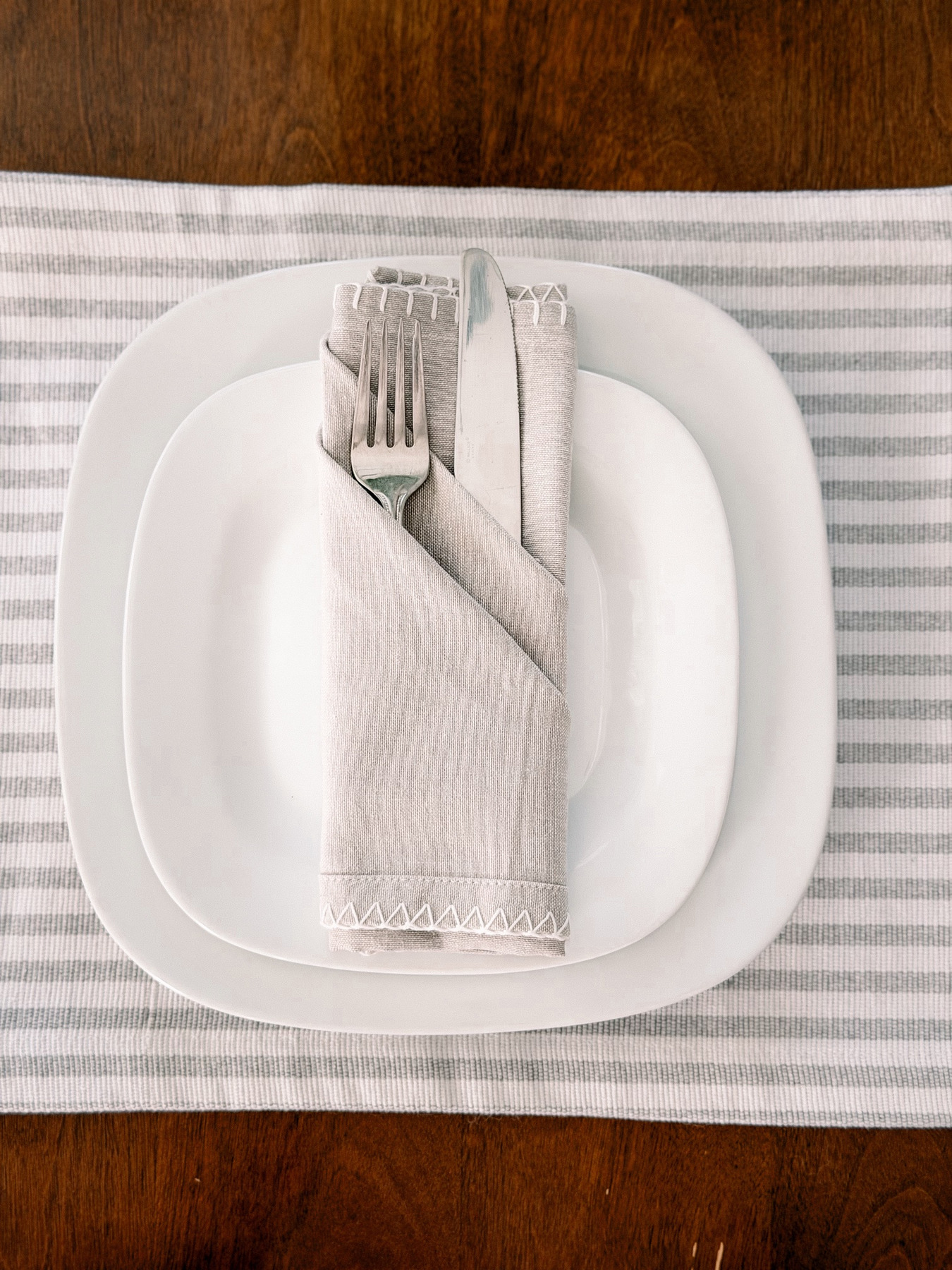
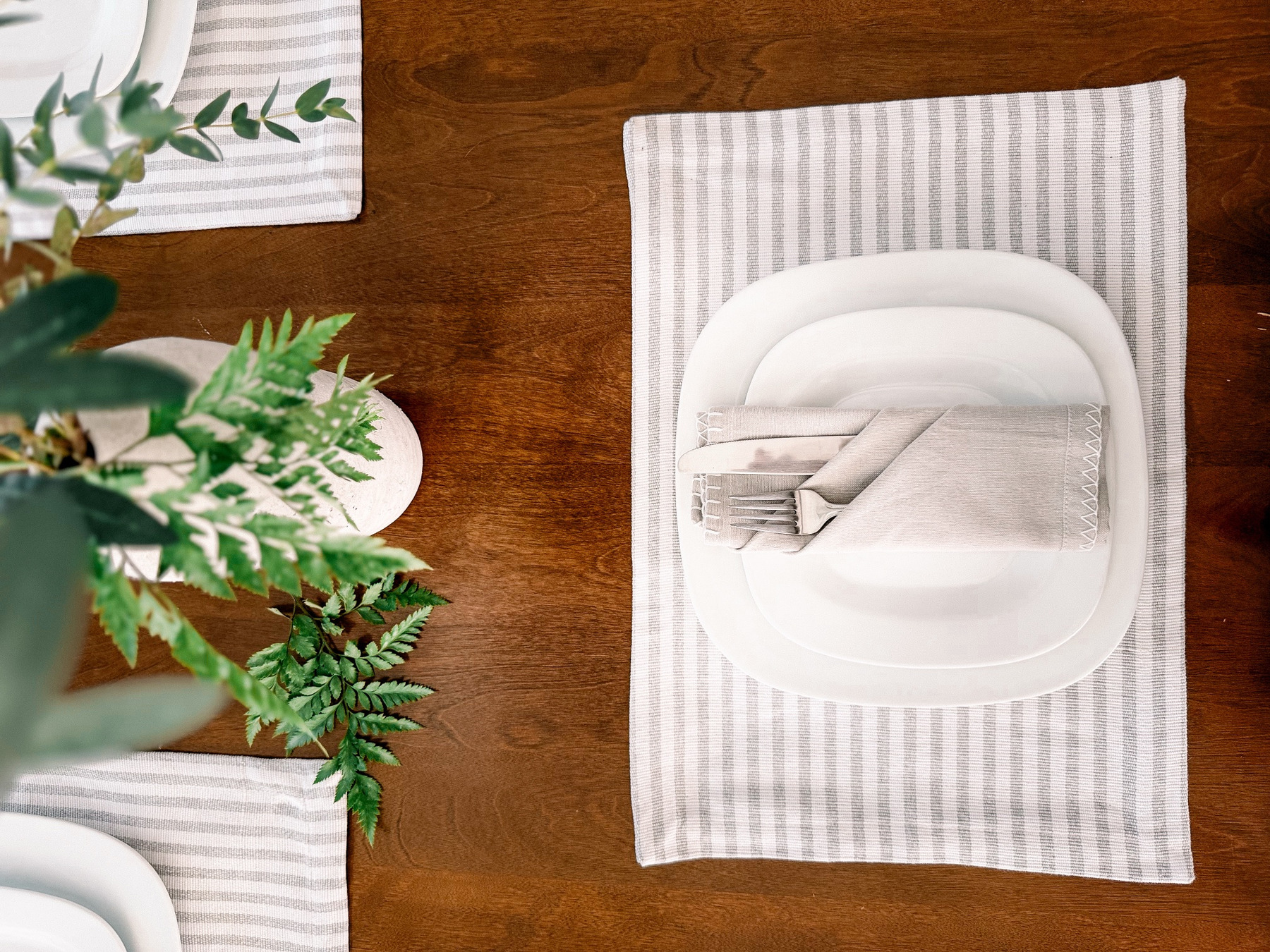
The practical one. The napkin folds into a flat rectangular pocket and the fork and knife slide straight in, so the whole place setting arrives as one piece and nobody is reaching across the table for cutlery.
This is the fold I use when I am feeding a lot of people, because you can make eight of them in a row without thinking about it.
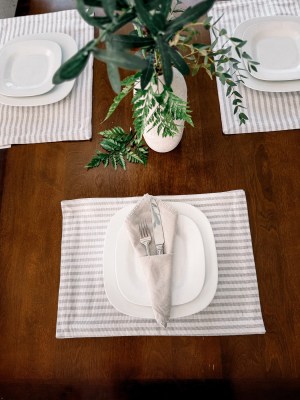
4. The cone
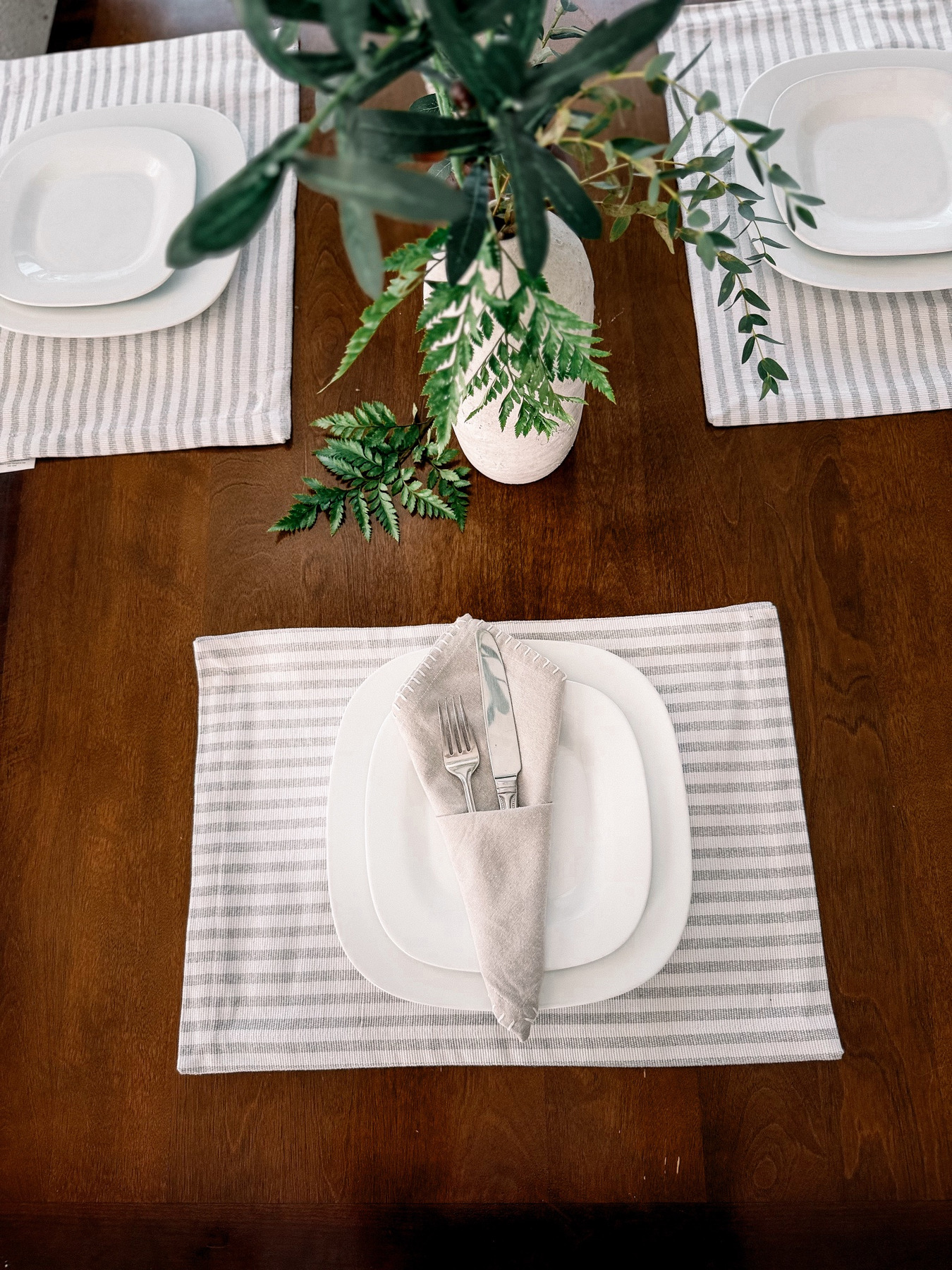
The pocket’s dressier relative. The napkin tapers to a point at the bottom and the cutlery sits in the opening at the top, with the stitched edge running down the front as a diagonal line.
Of the four, this is the one that reads most like a restaurant, which is either exactly what you want or not at all what you want, depending on the dinner.
Watch me fold all four
About the napkins
These are the Ivara napkins from Birch Lane. What makes them work for folding is the whip stitched edge, a contrast stitch that runs all the way around. It does two jobs at once. It gives the fold a defined outline so the shape reads clearly from across the table, and it gives a plain napkin something to look at, which means you do not need a patterned one competing with your plates.
They are a good weight. Heavy enough to hold a crease through a long dinner, not so heavy that they will not sit flat under a plate or tuck into a pocket fold.
One honest note. A napkin with a decorative edge wants pressing. If you are someone who pulls napkins out of the dryer and straight onto the table, a plainer hemmed napkin will serve you better and you will be happier with it.
The rest of the place setting
I kept everything else deliberately quiet so the napkin is the thing you notice. Plain white ceramic, a textured placemat, simple flatware and one green ring to tie it together. That is the whole setting, and it is five pieces.
If you build one place setting you are happy with, the rest of the table takes care of itself. You are not decorating a whole table at that point, you are repeating one thing you already like.
Shop this post
- Birch Lane Ivara napkins, the ones in every photo here
- Royal Imports Aspidistra pattern ribbon, the green one tied around the bow fold. Gifted by Royal Imports
- The whole Holiday Place Setting, the napkins plus pieces close to the dinnerware, placemat, flatware and ring I used
The links are affiliate links and I may earn a small commission.
One question
Which part of setting the table do you leave until last every single year? Tell me in the comments what it is and how many people you are feeding, and I will tell you the fold I would use.


Leave a Reply