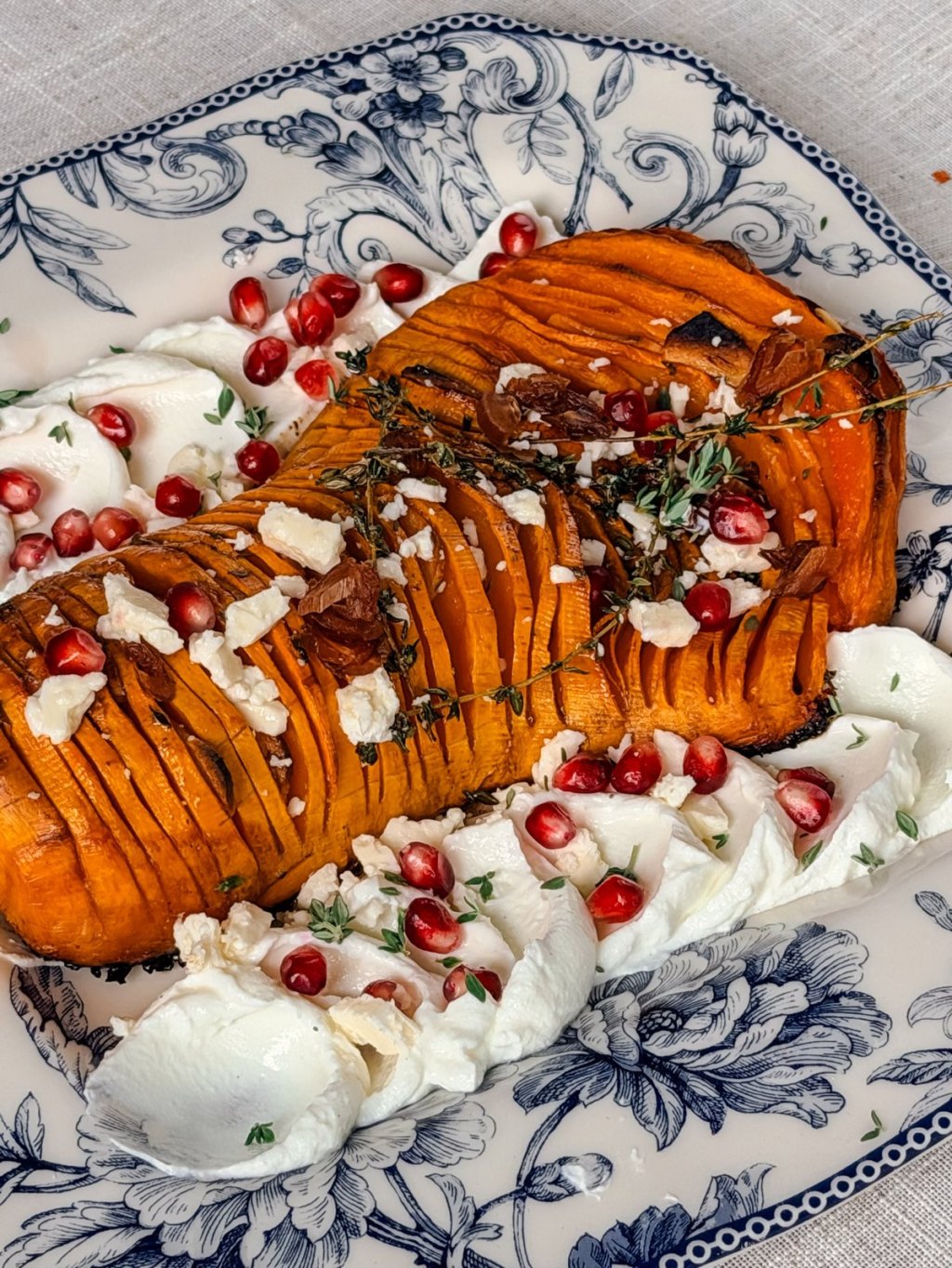
The one that looks hard and is not
Hasselback butternut squash is a whole squash sliced almost all the way through, brushed with maple butter, and roasted until the slices fan open and the edges caramelize. It takes about fifteen minutes of real work and an hour in the oven, and it comes out looking like something you would be served in a restaurant. I put mine over a layer of plain yogurt and finish it with feta, crispy thyme and pomegranate seeds.
This is the side dish I make when I want the table to look like I tried. It is the one people photograph before they eat it.
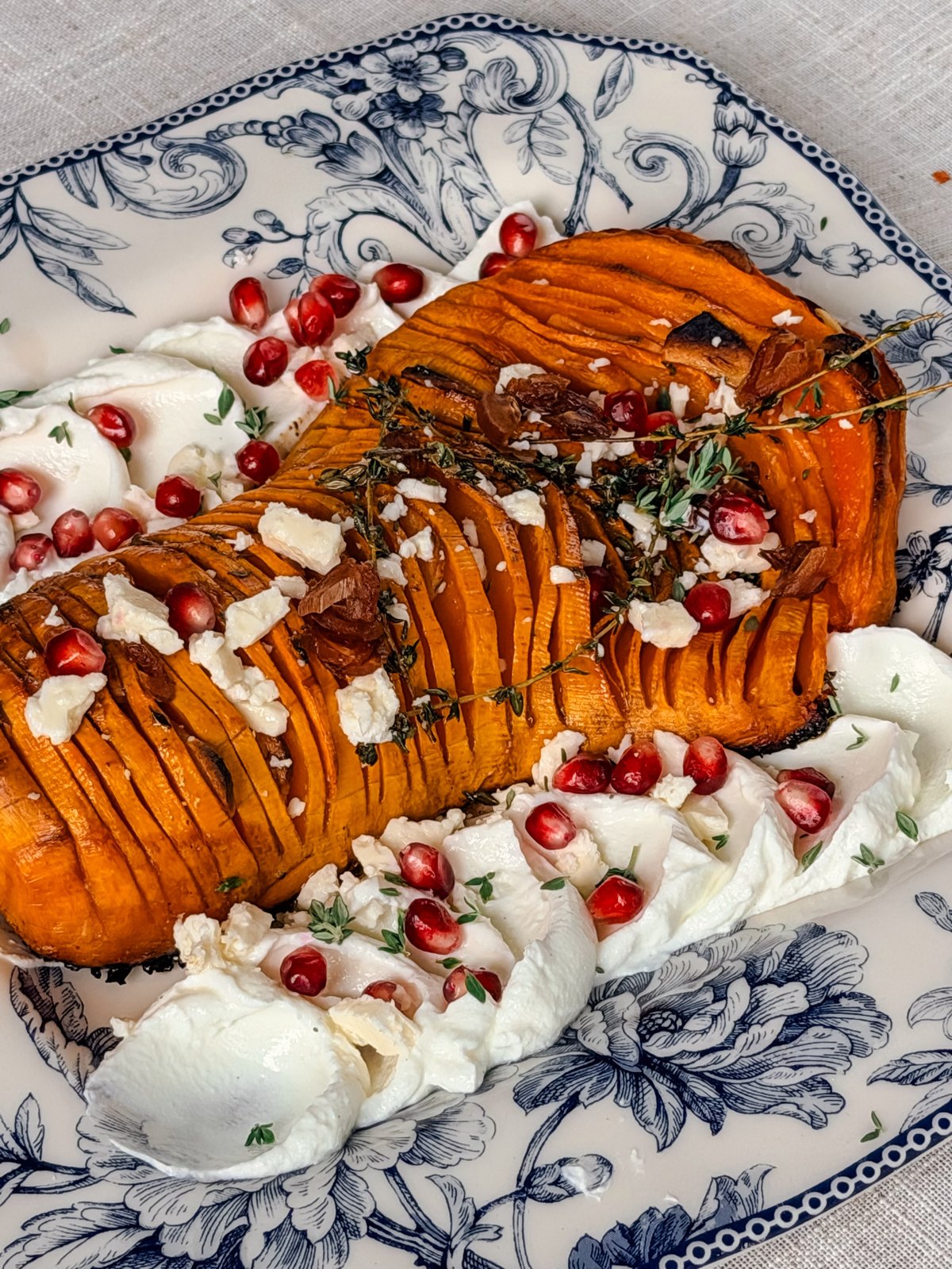
Why hasselback instead of cubes
Roasted squash cubes are good. I make them all the time. But they are not interesting to look at, and on a holiday table where everything is already some shade of brown and orange, you want one dish that has a shape.
Hasselback also does something cubes cannot. All those thin slices mean far more surface area touching the hot pan, so you get many more caramelized edges per bite. The maple butter runs down into every cut and glazes the inside of the squash, not just the outside. It tastes more like squash than cubes do, because almost none of the sweetness evaporates into the air of the oven.
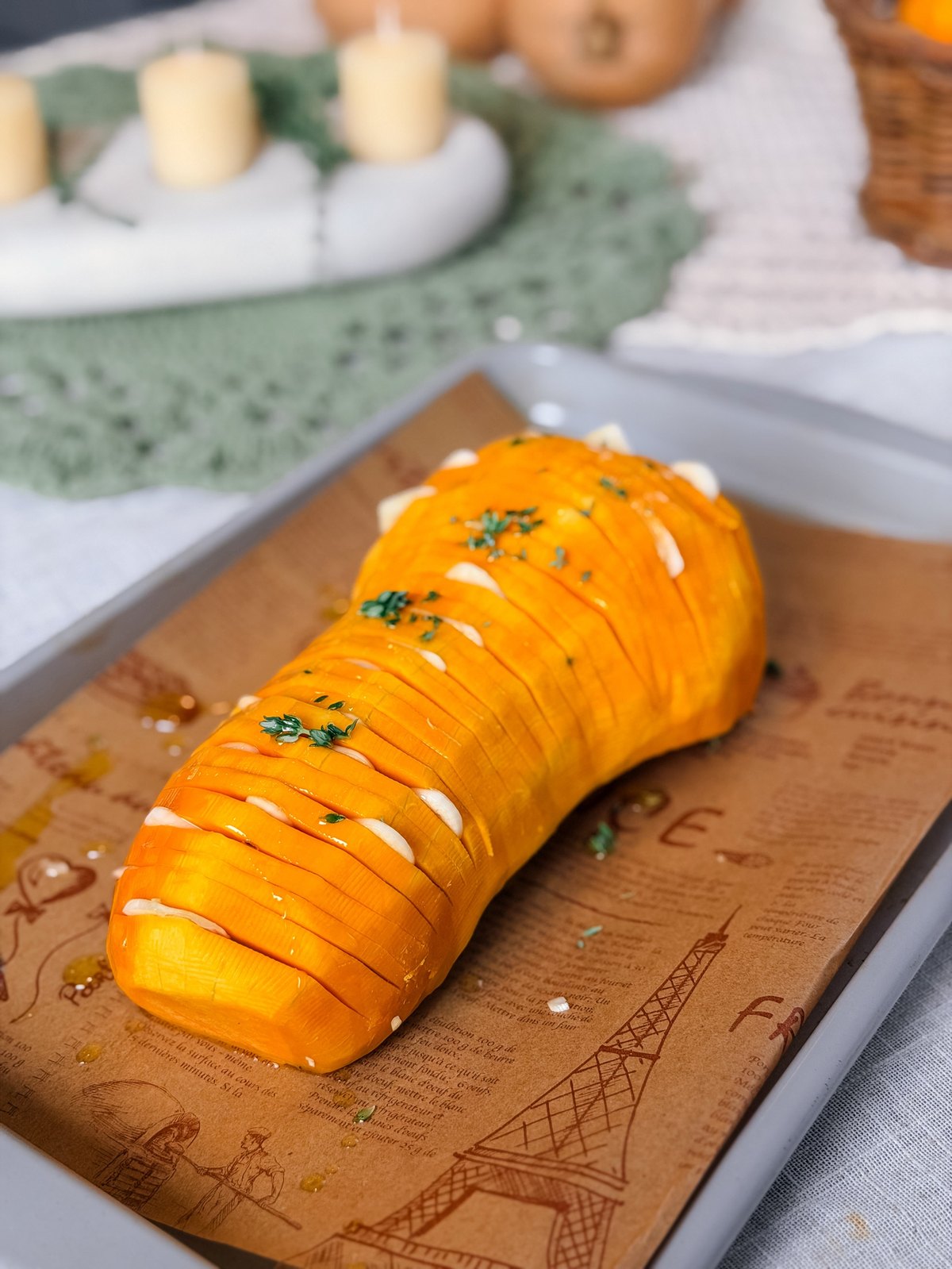
Buy the right squash
This is the step that decides whether the dish works, and it happens at the store.
You only hasselback the neck of the squash, the long solid part. The bulb at the bottom is hollow and full of seeds and it cannot be sliced this way. So look for squash with the longest, straightest necks you can find. A squash with a short fat neck and a big bulb is a great squash for soup and a bad one for this.
Buy one extra. They are a few dollars each and it is worth having a spare the first time you do this.
The chopstick trick
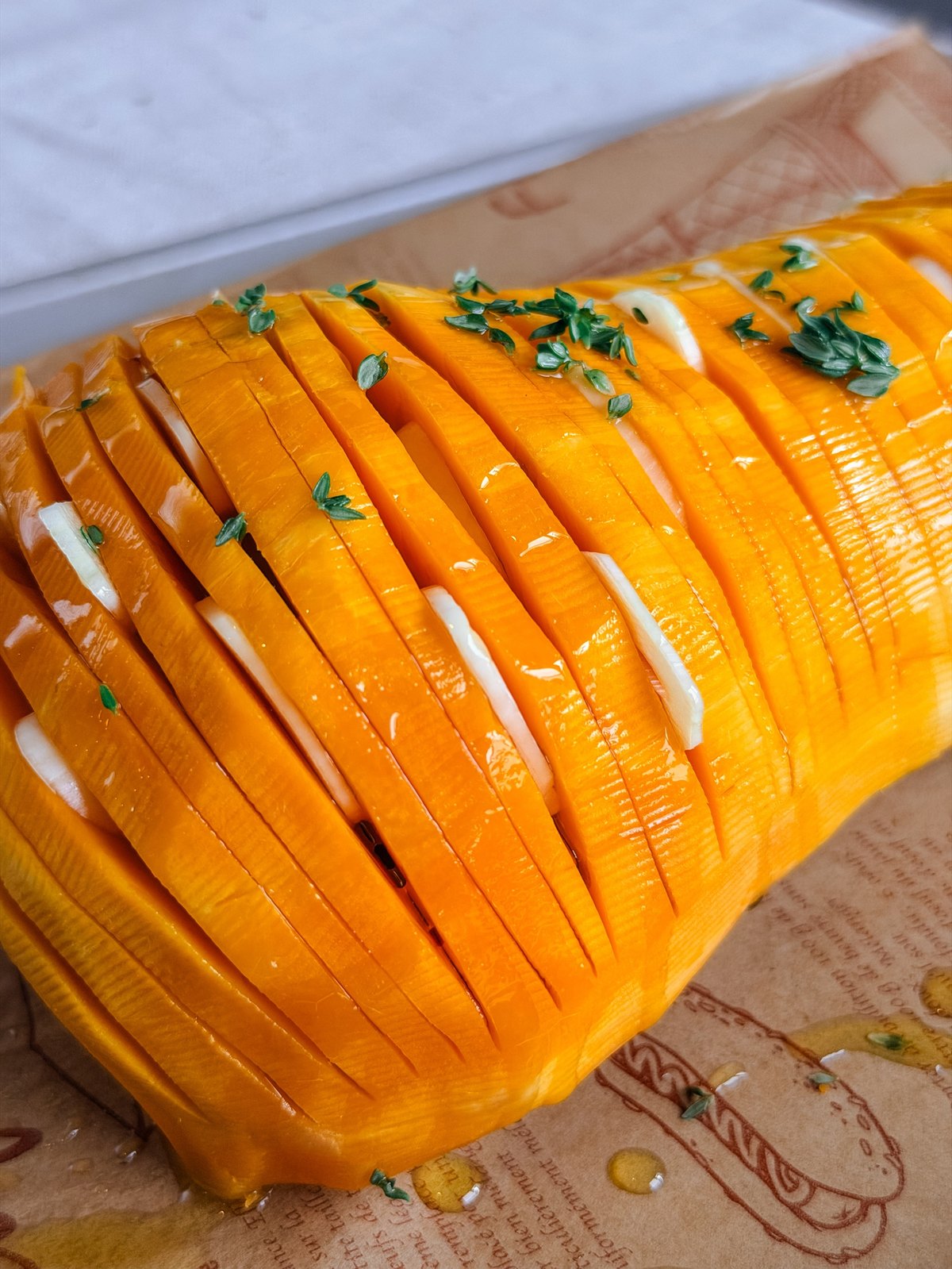
The only hard part of hasselback anything is slicing deep enough without cutting all the way through. Here is how you make that impossible to get wrong.
Lay two chopsticks on the cutting board, one on each side of the squash, running the length of it. When your knife comes down, it hits the chopsticks and stops. You physically cannot cut through. What I actually use is the handles of two wooden dough spoons, because they are thicker than chopsticks and they do not roll.
And here is the step that saves you before you even get to the slicing. Put the whole squash in the microwave for three minutes before you peel it. The skin loosens and the peeler goes through it instead of skidding off. Peeling a raw butternut is the part most people dread, and three minutes removes it entirely.
Ingredients
- 2 butternut squash with long straight necks
- 3 tablespoons butter, melted
- 2 tablespoons maple syrup
- 2 tablespoons olive oil
- Salt and black pepper
- A handful of fresh thyme sprigs
- 4 ounces feta, crumbled
- Seeds of 1 pomegranate
- Plain yogurt, for the plate
Buy the feta as a block and crumble it yourself. Pre crumbled feta is coated so it does not stick together, and it goes chalky instead of creamy. It is a small thing that makes a visible difference.
How to make it
- Heat the oven to 425F.
- Microwave the whole squash for 3 minutes. This loosens the skin and makes peeling easy.
- Peel the squash. Cut off the bulb ends and save them for something else. Halve the necks lengthwise and lay them flat side down on a baking tray lined with parchment paper. Maple butter burns onto a bare pan and parchment saves you the scrubbing.
- Lay a wooden spoon handle along each side and slice across the squash about a quarter inch apart with a sharp knife, letting the blade stop on the handles.
- Whisk together the melted butter, maple syrup, olive oil, a good pinch of salt and some pepper. Brush it all over and work it down into the cuts with the tip of the brush.
- Roast 40 to 50 minutes, basting once around the halfway point, until the squash is tender all the way through and the edges have gone deep gold.
- While it roasts, melt a spoonful of butter in a small pan over medium heat. Lay the thyme sprigs in flat and let them sizzle about 30 seconds, until they darken and go crisp. Lift them out onto a paper towel and strip the leaves off when they cool.
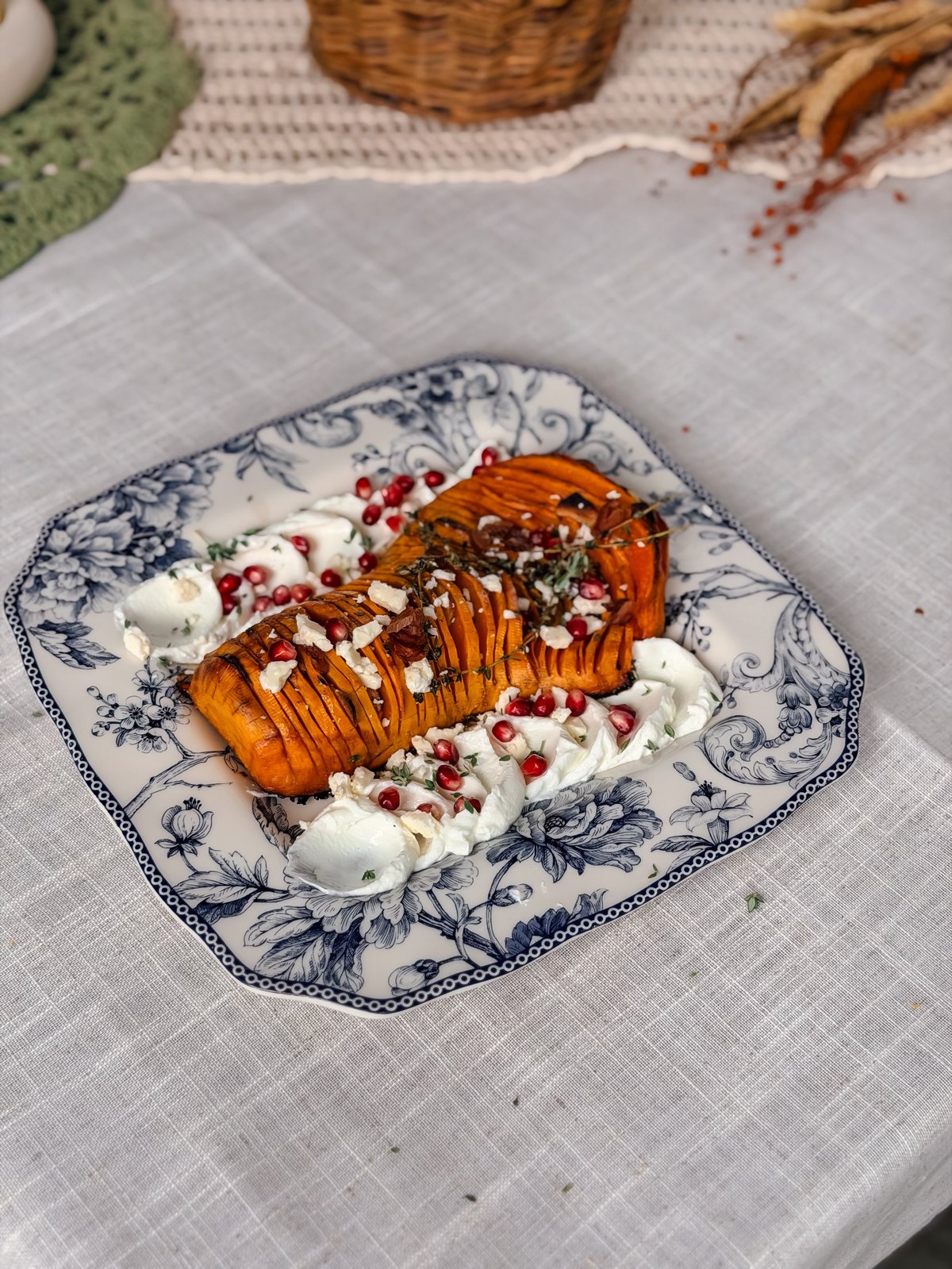
- Spoon yogurt onto the serving platter and spread it around with the back of the spoon. Set the hot squash on top. Scatter the feta, the pomegranate seeds and the crispy thyme over it.
Why the yogurt goes underneath
Roasted squash with maple is sweet. Without something to push against it the whole dish reads as dessert, especially next to the other sweet things on a holiday table.
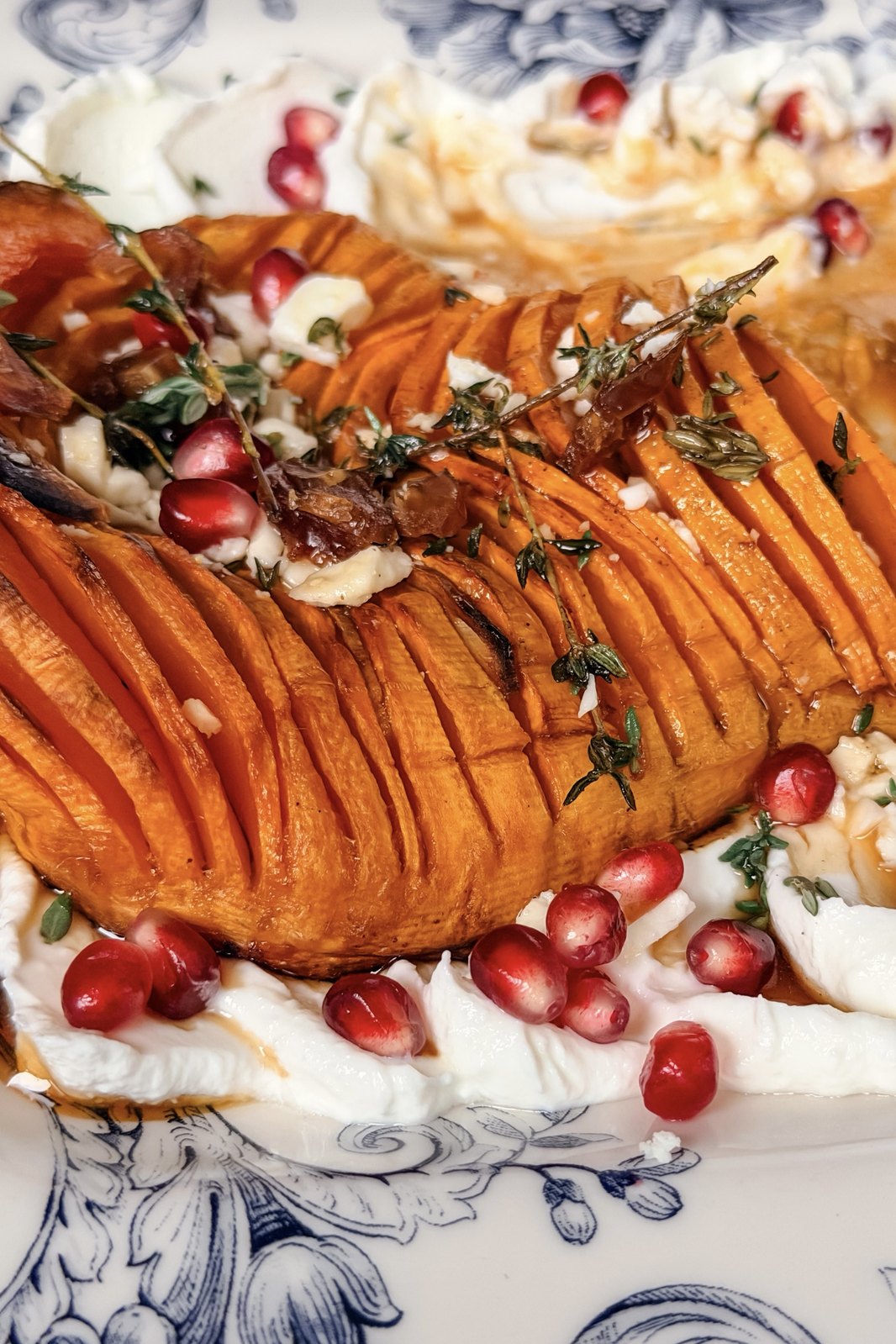
Cold plain yogurt under the hot squash fixes that. It is tangy, it is cool against the warm squash, and it catches the maple butter that runs off so nothing is wasted on the plate. It also makes the dish look finished rather than like squash sitting on a plate.
Use plain whole milk yogurt or labneh. Greek yogurt works and is thicker. Do not use anything sweetened.
Substitutions
- No pomegranate: dried cranberries, or halved red grapes. You want something small, red and sharp.
- No feta: goat cheese, or shaved parmesan. Both are salty enough to do the job.
- No maple syrup: honey, or brown sugar stirred into the butter.
- Make it dairy free: olive oil instead of butter, skip the cheese, and use a thick coconut yogurt underneath.
- Add crunch: toasted pistachios or pecans scattered on at the end.
Make it ahead
You can peel and slice the squash the day before and keep it in the fridge wrapped tightly. Make the maple butter ahead too and warm it to loosen before brushing.
Seed the pomegranate the day before as well. That is the messiest job in the recipe and you do not want to be doing it with guests in the kitchen.
What I would not do ahead is the roasting. This is best straight out of the oven, when the slices are still fanned and the edges are still crisp. Reheated, it softens and loses the shape that is the whole point.
What to serve it with
This is a Thanksgiving side, and it sits well next to anything roasted. It is also good enough to be dinner on its own with bread and a green salad.
If you are building a whole table around it, something warm and savory to start helps. My roasted butternut squash soup uses the same ingredient in a completely different way, and the no cook appetizer board is what I put out while everything else is still in the oven.
Questions people ask
Do I have to peel it?
For this one, yes. Butternut skin is edible and softens beautifully when you roast halves face down, which is why you do not peel it for soup. But with hasselback the skin sits between every slice and stops them from fanning open, so it has to come off first.
How thin should the slices be?
About a quarter inch. Thinner looks more dramatic but the slices dry out and break. Thicker does not fan open properly.
Can I use a different squash?
Delicata works and you do not even have to peel it. Acorn squash does not, the shape fights you. Butternut is the one worth buying for this.
How far ahead can I seed the pomegranate?
Two or three days in an airtight container in the fridge. They stay crisp.
What I used
- Porcelain floral dinnerware set, the platter is part of this set
- Cutting board, similar to mine
- Wooden dough spoons, the ones I use as the guides
- Knife, comes as a set of two, mine is the larger size
- Baking tray, very similar to mine
- Parchment paper, the printed one in the photos
- Linen tablecloth
- Crocheted round placemats, similar to mine
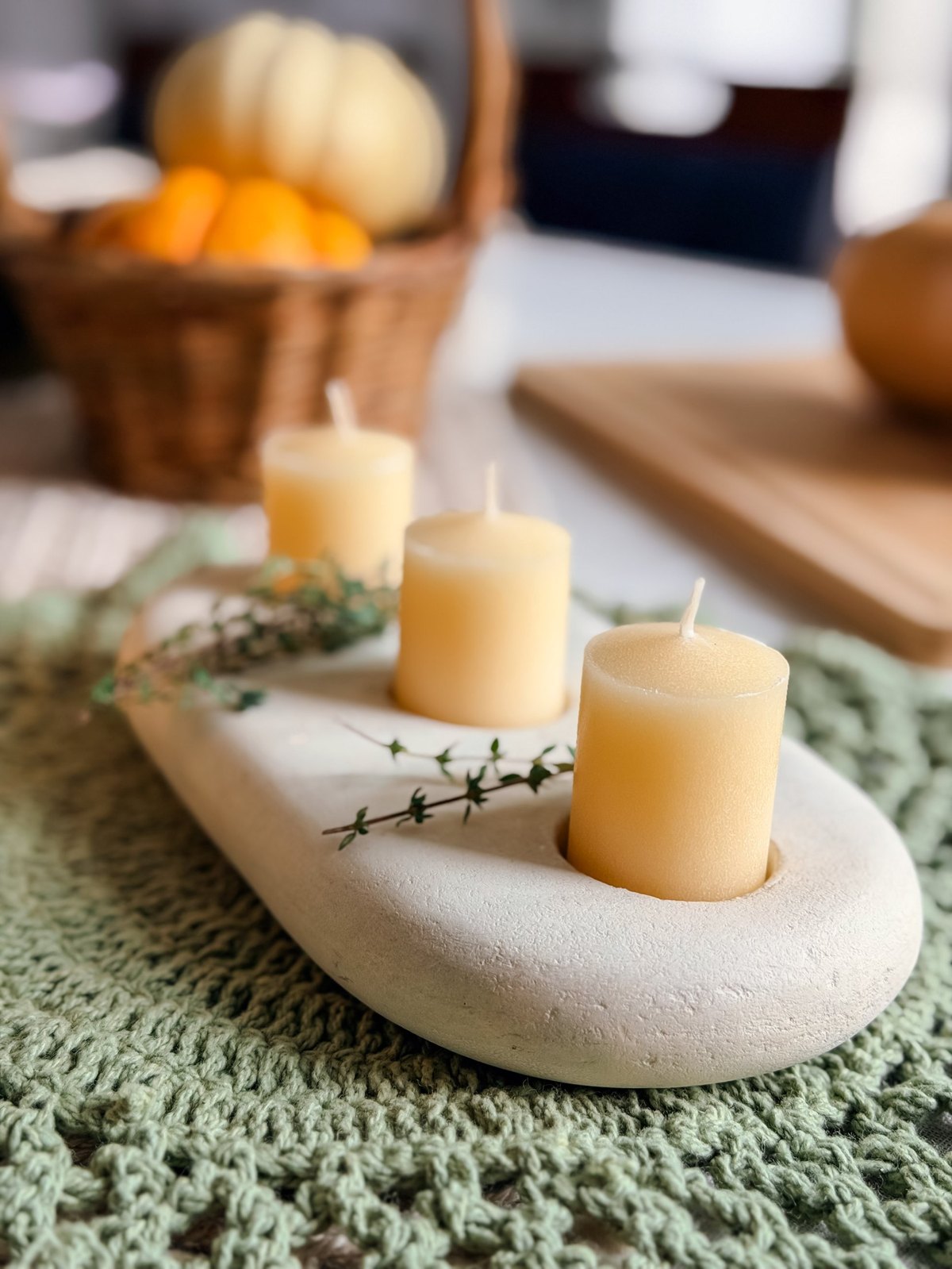
- Candles on the stone tray (gifted)
- Basket (gifted)
Gifted items are marked, and some of these are affiliate links.


Leave a Reply